Showing posts with label Travel Tourism Wallpapers. Show all posts

Saturday, June 25, 2011

Places To Visit In Nepal


Are you ready for some high altitude adventure with in a soul-warming environment? Then pack your bags and experience some of the most majestic peaks, most exhilarating torrents and wonderful people Nepal has to offer. Here are some places you may want to visit when go.


Find your inner peace in the streets of Nepal's capital and cultural center. You can walk on the streets of this once inaccessible city and experience the culture, the people, the history, and the faith Nepal had embraced, imbibed, and relived for centuries. Katmandu is also one of the Nepal's starting points in activities like trekking, rafting and other sports. Know More About Kathmandu Click Here


If you want to experience some jungle adventure with the elephants and ravaging rapids, you may want to stop by Nepal's Royal Chitwan Park. Covering some 932 sq kilometers, this national park serves as a home for 450 species of birds, 45 species of reptiles and amphibians, and 43 species of mammals. One can also enjoy guided jungle walks, terai culture, wild life breeding project, and safari drives inside 4WD cars. Read MoreClick Here


Located 32 kilometers east of Katmandu, Nagarkot is a great place to visit if you want to see how beautiful and majestic the Himalayan Mountain range can be. A lookout tower in Nagarkot, for one, enables visitor to have a 360-degree scenic view of the Katmandu valley and Himalayan Mountain peaks. Drive up the city, book for a hotel, wake up early, and experience a different kind of sunrise with cool winds blowing every word away. Click Here to Know More about Nagarkot

4.) Pokhara
Located some 200 kilometers west of Kathmandu, this enchanting city is the rally point for trekking and rafting destination.Pokhara offers perfect scenery and gripping natural beauty not only for those who looks for fun but also for those seeking solace. Be it the preview of the Himalayan Mountain range, a row in Phewa Lake, a trek beside Seti Gandaki River and Devi's Fall, or a peek to the Mahendra Cave, a trip to Pokhara is a experience worth the journey. Know More Click Here

5.) Pashupatinath Temple
Four kilometers east of Katmandu lies a temple of immeasurable sacredness for Hindu people - the Pashupatinath. Hindu believes that dying and being cremated in Pashupatinathand having one's ashes scattered in Bagmati Riverwill give a Hindu salvation and release from the cycles of birth and rebirth. Have a peek of Hindus life, death and tradition by visiting this holy ground.

6.) Patan
Art lovers and enthusiasts should always put a stop in Patan in their Nepalese trip itineraryPatan is the oldest city in the Ksthmandu valley and is the home for Nepalese architecture, arts, traditions, and crafts drawing mainly from religious customs. Walk around the city and feel as if you're walking inside an open museum.


7.) Wildlife Reserve of Koshi Tappu
Sprawling some 175 km2 near the River of Sapta-Koshi in Eastern Nepal, Koshi Tappu Wildlife Reserve is the best place to watch native and migratory birds in action. Thousands of birds converge in this area, especially during the months of January, February and March. The trip which normally includes jungle walks, jeep drives, and boat rides, coupled with treks to Bhutan and Sikkim or rafting trip in Sunkosi will make any Nepalese trip an unforgettable experience.

8.) Lumbini

Lumbini is the perfect place to go to if you are into cultural, archaeological and religious treasures. With the number of stupa, meditation grounds temples, courtyards and more, a walk in Lumbiniis a walk with Buddha. Enter the birthplace of one of the greatest man of world religions - Siddharta Gautama, founder of Buddhism - and be captivated by its serene environment and meditate and reflect with its outmost tranquility and peaceful atmosphere.

9.) Bhaktapur

Bhaktapur is an ancient town east of Katmandu in the Katmandu Valley. Experience Nepalese life as it happens in this city by enjoying the scenery in Bhaktapur Durbar Square and Potter's square. Make your trip complete with a taste of Khopa Dhau, Bhaktapur's home-made curd.


10.) Royal Bardia National Park

Located in Western Terai,Royal Bardia National Park is the largest park in the region with 968 km2. It serves as a sanctuary for tigers, small and large mammals, deer, reptiles, birds, and a herd of the last known elephants in captivity. Enjoy wildlife as it happens along with short rafting in Karnali and Bherias well as trekking to Dolpo and Rara lake.

Sunday, June 19, 2011

Angry Elephant


Hd Animal Wallpapers And Pictures


Top 10 Most Enigmatic & Mysterious Places In The World

Top 10 Most Enigmatic & Mysterious Places In The World

Many popular experts suggest possibility that mysterious sites around the world were created with help of advanced knowledge and technology (possibly more advanced than our current one) possessed by lost civilizations. Others do not believe that there ever was very advanced civilization on earth and all of the superb knowledge was handed down to us by ancient astronauts who came down from heaven. Most scientists do not subscribe to any of these ideas and try to explain ancient enigmas on the ground of religion and ritual. Here are top 10 most enigmatic places in the world:

1. The Pyramids of Giza and the Sphinx (Egypt)

Although it is clear the pyramids were used for the burial of pharaohs, the construction, date, and possible symbolism of the Giza pyramids are still not entirely understood. This mystery only adds to the attractiveness of these ancient wonders and many modern people still regard Giza as a spiritual place. A number of fascinating theories have been offered to explain the “mystery of the pyramids”. Even the most skeptical visitor cannot help but be awed by the great age, grand scale and harmonic mathematics of the pyramids of Giza.

2. Stonehenge (Great Britain)

Perhaps the world’s best known monument is Stonehenge, located in the English county of Wiltshire. It’s composed of earthworks surrounding a circular setting of large standing stones and is believed to have been built around 2500 BC but has been revised and remodeled over a period of more than 1400 years. Though theories and speculation abound, no one knows what the original purpose of the prehistoric monument was and it remains one of the earth’s greatest mysteries.

3. Easter Island (Chile)

Easter Island, also known as Rapa Nui or Isla de Pascua, is a Polynesian island in the southeastern Pacific Ocean, most famous for its monumental statues which were created by the Rapanui people. The statues, called moai, were part of the ancestral worship of the island’s settlers and were carved between 1250 and 1500 CE. The heaviest moai erected weighs 86 tons, illustrating how great a feat it was for the Rapanui to have created and moved them. Nearly half of all remaining moai are still at Rano Raraku, the main moai quarry, but hundreds were moved to stone platforms around the island’s perimeter.


4. Baalbeck (Lebanon)

Baalbeck is a city in eastern Lebanon. It was a flourishing Phoenician town when the Greeks occupied it in 331 B.C. It became a Roman colony under the Emperor Augustus in 16 B.C.On its acropolis, over the course of the next three centuries, the Romans constructed a monumental ensemble of three temples, three coutyards, and an enclosing wall built of some of the most gigantic stones ever crafted by man. Some tourists believe that the construction can only be attributed to extra-terrestial artwork . At the southern entrance of Baalbeck is a quarry where the stones used in the temples were cut. A huge block, considered the largest hewn stone in the world, still sits where it was cut almost 2,000 years ago. Called the “Stone of the Pregnant Woman”, it is 21.5m x 4.8m x 4.2meters in size and weighs an estimated 1,000 tons.

5. Machu Picchu (Peru)

Machu Picchu is the most well-preserved city of the Inca empire, hidden in the Peruvian Andes high on a steep mountain with a flattened top, a location that helped it escape notice by Spanish conquistadors. It was forgotten for centuries by the outside world, and re-discovered by archeologist Hiram Bingham in 1911. The stones of this city fit together so tightly a knife blade can’t fit between them. Modern research suggests that Machu Picchu was built around 1450 CE as a retreat by and for the Inca ruler Pachacuti and that it was actually relatively small by Inca standards.

6. Nazca Lines (Peru)

Nazca Lines are the most outstanding group of geoglyphs in the world, they are located in the Nazca Desert. Etched in the surface of the desert pampa sand about 300 hundred figures made of straight lines, geometric shapes and pictures of animals and birds – and their patterns are only clearly visible from the air. To comprehend the Nasca lines, created by the removal of desert rock to reveal the pale pink sand beneath, visitors have proposed every imaginable explanation – from runways for spaceships to tracks for Olympic athletes, from op art to pop art, to astronomical observatories.

7. Tiahuanacu (Bolivia)

Tiahuanacu (also called Tiwanaku) is a mystery because of its age (estimated to be 17,000 years) and the peculiar stone technology. Today there is little doubt that Tiahuanaco was a major sacred ceremonial centre and focal point of a culture that spread across much of the region. The ancient people built a stone pyramid known as the Akapana.

8. Chichen Itza (Mexico)

Chichén Itzá is an archeological site of an ancient city built by the Mayas. The site contains various massive structures such as El Castillo (the Temple of Kukulkán) and the Temple of the Warriors, on top of which we find a statue of Chac-Mool or Rain God, on which it is said that the Mayan priests placed still beating hearts removed from living victims in their sacrificial rituals. Chichén Itzá was a vast metropolis. It was built by a Mayan tribe called the Itzáes in the 9th century AD and flourished as a major regional capital until the 12th century. The true origin of the Itzá people still remains mystery.

9. The Stone Spheres of Costa Rica

One of the strangest mysteries in archaeology was discovered in the Diquis Delta of Costa Rica. Since the 1930s, hundreds of stone balls have been documented, ranging in size from a few centimetres to over two meters in diameter. Some weigh 16 tons. Almost all of them are made of granodiorite, a hard, igneous stone. These objects are monolithic sculptures made by human hands.

10. Underwater Ruins in Japan

On the southern coast of Yonaguni, Japan, lie submerged ruins estimated to be around 8,000 years old. Though some people believed that it was carved by geographic phenomena, it’s now confirmed to be man-made as the intricate stairways, carvings and right angles suggest. It was discovered in 1995 by a sport diver who strayed too far off the Okinawa shore with a camera in hand.

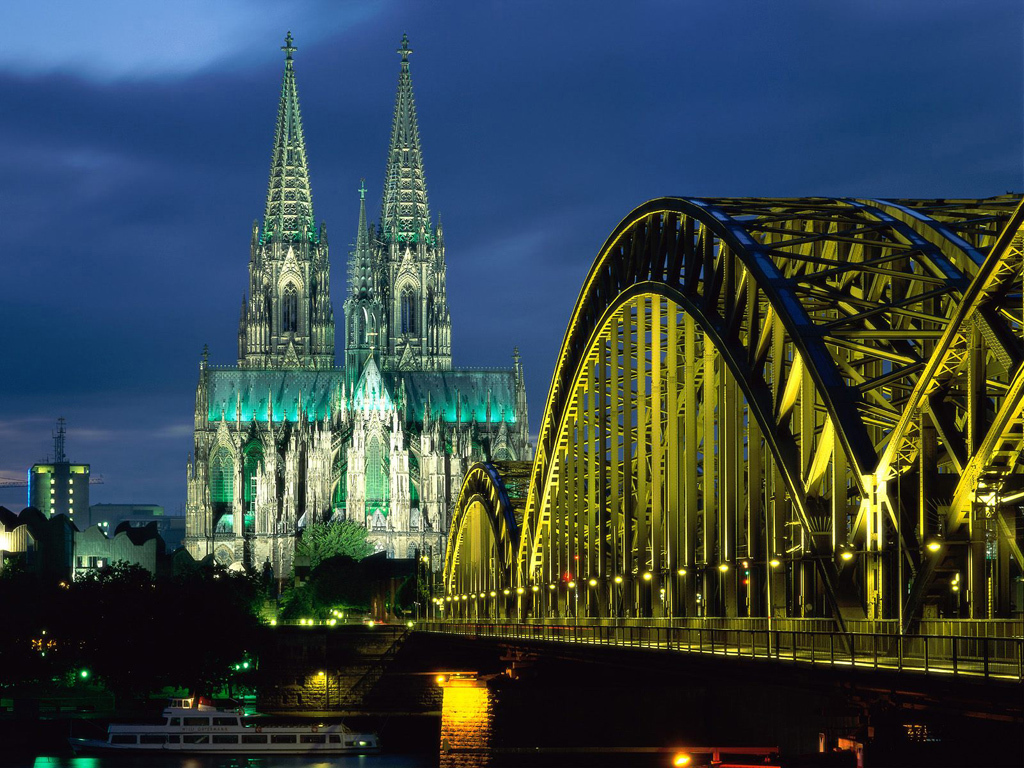
Germany Landscape nice view

Castles, vineyards, quaint villages - just some reasons why you should include a Rhine Valley cruise on your vacation or honeymoon in Germany!

You can cruise the Rhine in Germany from Cologne to Mainz on several different cruiselines.

Several cruiselines offer 3, 4 and 5 day Rhine cruises. Or you can:

* buy full and half-day Rhine River cruises
* go for the cheap deal of just cruising between towns of your choice.

We went with Rick Steeve’s tip and got return tickets on the KD line between St. Goar and Bacharach (one of the most scenic parts of the Rhine Valley). The price was a bargain - just 12 Euros return per person! The boats have open decks and even serve beer and wine

Germany Landscape